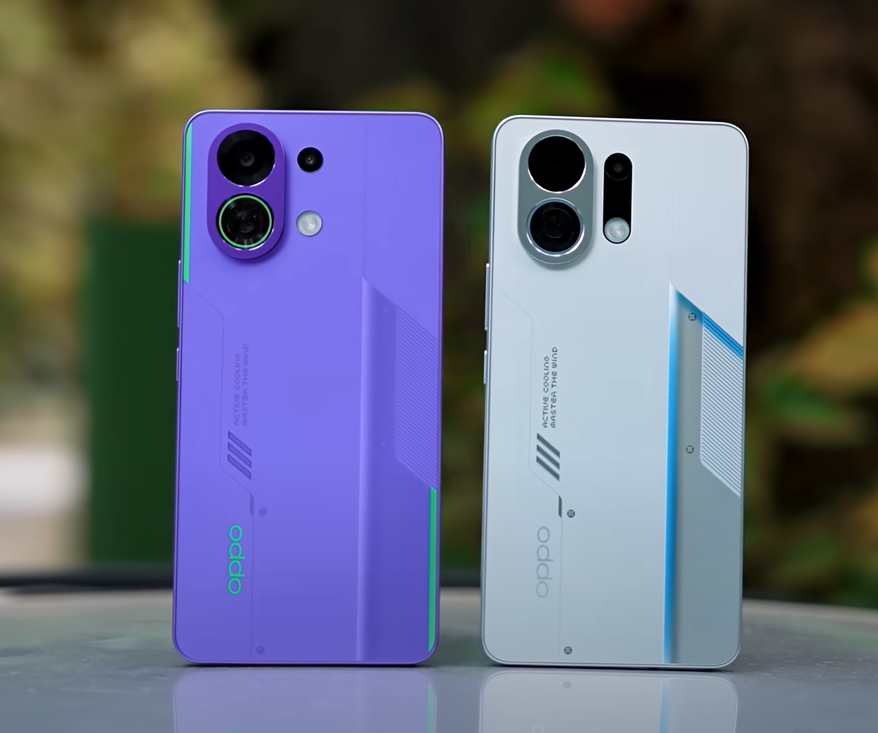
Oppo has officially brought its performance-focused K13 Turbo family to India, two models (K13 Turbo and K13 Turbo Pro) built around sustained performance for gamers and power users. The headline: an integrated active cooling system (Oppo calls it the Storm Engine), large 7,000mAh batteries with fast wired charging, and big flat e-sports style screens, all set for delivering stable frame rates during long sessions.
Table of Contents
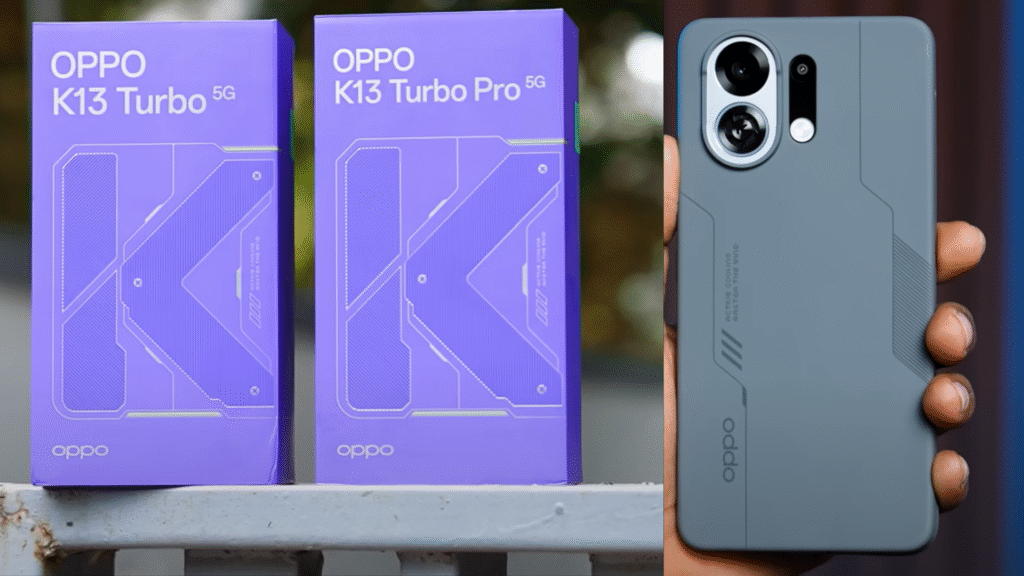
Oppo K13 Turbo 5G vs K13 Turbo Pro 5G – Full Comparison
| Feature | Oppo K13 Turbo 5G | Oppo K13 Turbo Pro 5G |
|---|---|---|
| Display | 6.8″ LTPS Flexible AMOLED, 120Hz, 1,600 nits | 6.8″ LTPS Flexible AMOLED, 120Hz, 1,600 nits |
| Processor (SoC) | MediaTek Dimensity 8450 | Snapdragon 8s Gen 4 |
| RAM / Storage | 8GB + 128GB / 256GB | Up to 12GB + 256GB |
| Cooling | Storm Engine + 7,000mm² Vapour Chamber | Storm Engine + upgraded 7,000mm² Vapour Chamber |
| Rear Cameras | 50MP (OV50D40) + 2MP depth sensor | 50MP (OIS in some variants) + 2MP depth |
| Front Camera | 16MP | 16MP |
| Battery | 7,000mAh + 80W Super Flash Charge | 7,000mAh + 80W Super Flash Charge |
| OS | ColorOS 15 (Android 15) | ColorOS 15 (Android 15) |
| Colours | Knight White, First Purple, Midnight Marvier | Silver Knight, Purple Phantom, Midnight Maverick |
| Launch Price (India) | From ₹24,999 (8GB+128GB) | From ₹34,999 (8GB+256GB after discount) |
| Best For | Balanced performance & battery | Maximum performance & gaming stability |
Design & display (e-sports ready)
Both phones favor a flat, gamer-friendly 6.8-inch AMOLED panel tuned for competitive play: 120Hz adaptive refresh and high touch sampling to reduce input lag, and an exceptionally bright 1,600-nit peak for outdoors. Oppo K13 Turbo came with bold – RGB/accents and a “racing” motif on the rear for the Turbo Pro variants, but Oppo kept the screens flat (many gamers prefer flat panels for grips and controller clips).
Performance & the Storm Engine
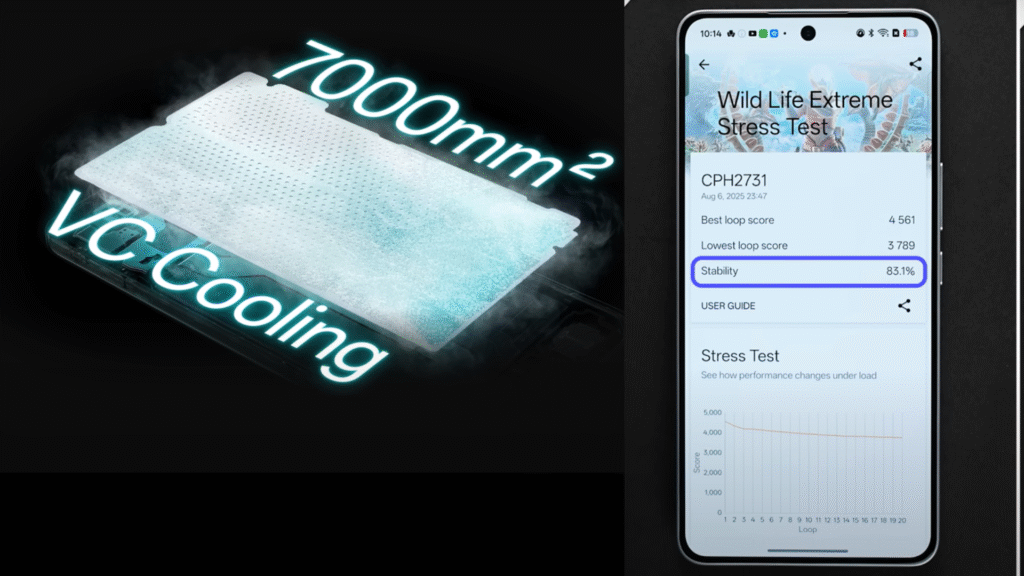
If you push today’s mobile titles for long stretches, thermals and throttling matter. Oppo’s Storm Engine pairs a micro centrifugal fan with a large vapour chamber and high-conductivity materials to actively pull heat away from the SoC and vent it out, an approach we normally see only in clip-on coolers or niche gaming phones. Early hands-on and first impressions report meaningful temperature drops under load and more stable frame delivery, thanks to the combo of fan + 7,000mm² VC. The Pro gets Qualcomm’s Snapdragon 8s Gen 4 for top-end mid-range performance; the base Turbo uses MediaTek’s Dimensity 8450, which is still a strong performer for most games.
Note: An active fan in a smartphone is unusual – Oppo says it’s engineered to survive everyday use (IPX water-resistance claims on some listings) and even includes maintenance accessories in some unboxings (a small brush to clean the fan). Look for long-term reviews if you’re worried about dust/wear.
Battery life & charging
The 7,000mAh packs are massive by modern standards and, coupled with Oppo’s charging tech, make the K13 Turbo family endurance leaders in their price band. Oppo’s 80W wired charging should fill the large battery noticeably faster than older 30–65W standards. real-world full-charge times will vary, but early tests of similar Oppo 7,000mAh phones show full charges in roughly under an hour with 80W chargers. Expect all-day (and then some) battery life even with heavy gaming.
Cameras & software
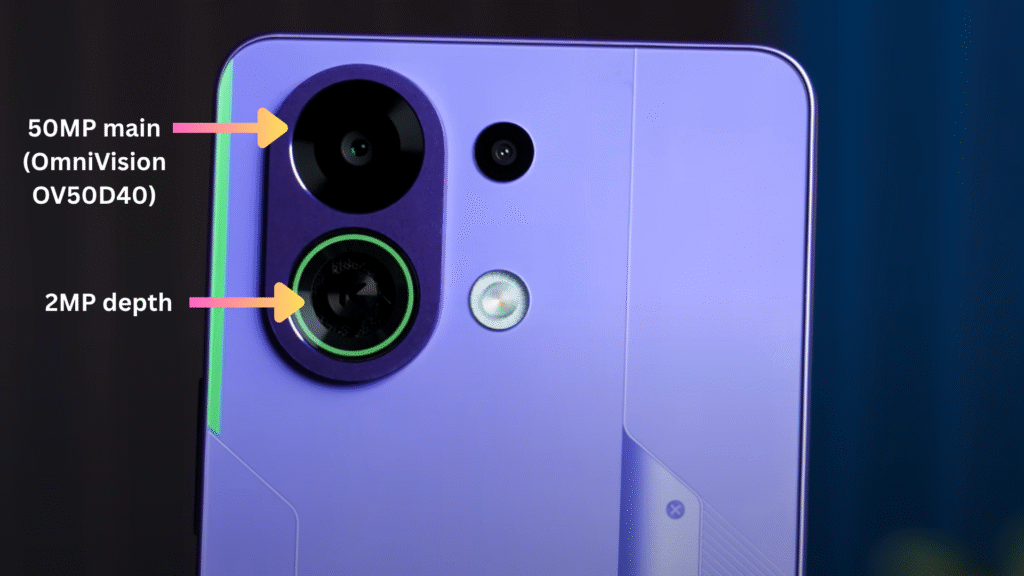
Both phones Oppo K13 Turbo series stick to a straightforward camera setup: a 50MP main (OmniVision OV50D40) in daylight and standard capture, plus a 2MP depth/macro secondary. Selfies come from a 16MP front camera. If you prioritise flexible camera systems (ultrawide, telephoto), these phones are not camera flagships – their focus is performance and thermal stability. Both ship with ColorOS 15 on Android 15, and Oppo’s recent mid-range policy usually promises a couple of Android upgrades and a few years of security updates; check the official product page at purchase for the exact update commitment.
Price & availability — what to expect
Oppo has positioned the Oppo K13 Turbo series under ₹40,000 for India and confirmed Flipkart + Oppo e-store retail channels. Multiple leaks and retailer listings before launch suggested base prices around ~₹25k–₹30k range for the K13 Turbo and ~₹30k–₹40k for the Turbo Pro depending on RAM/storage and launch offers — actual first-sale pricing will depend on launch discounts and bank deals, so check Flipkart/Oppo on sale day for the exact numbers.
Alternatives to consider
- Poco/Redmi “Turbo” lineup (similar performance focus), Poco F7 (compares to Turbo Pro on chipset).
- Infinix GT / Realme GT-class phones usually strong spec/value for gamers (compare on price when sale starts).
In Conclusion:

Oppo’s K13 Turbo family brings idea to mainstream India: an integrated active cooling system built to keep modern mid-range flagship chips at peak performance longer. Coupled with a 7,000mAh battery, bright 1.5K AMOLED screens along with ColorOS 15, the phones are pitched squarely at gamers and heavy users. Final buying decisions should wait for the launch-day price and the first unbiased long-term reviews (to see how the fan holds up). Oppo’s channel partners (Flipkart and the Oppo e-store) will carry the phone at launch — watch for the first-sale deals.