Table of Contents
Color blindness – Imagine stepping outside and choosing your outfit only to find red and green look almost identical. Or picture struggling to tell if a banana is ripe, even though everyone else sees its vibrant yellow glow. For the approximately 300 million people worldwide with color vision deficiency, life includes such daily puzzles. That’s nearly the population of the United States!
What Is Color Blindness?
Color blindness, more accurately known as Color Vision Deficiency (CVD), is not about seeing in black and white. Most people with CVD perceive colors, but certain shades appear washed out, muted, or confusing.
This occurs when the eye’s cone cells, responsible for detecting red, green, and blue light, are absent, malfunctioning, or less sensitive than usual.
Types of Color Blindness
1. Red–Green (most common):
Includes four subtypes, Protanopia/Protanomaly (red-weak/missing) and Deuteranopia/Deuteranomaly (green-weak/missing).
2. Blue–Yellow (rare):
Known as Tritanopia/Tritanomaly, affects the ability to differentiate blues from greens or yellows from reds.
3. Monochromacy (extremely rare):
When Cone function is severely limited or absent, leading to total color blindness (achromatopsia) often accompanied by light sensitivity and poor visual acuity.
Causes: Why Does It Happen?
1. Inherited (Genetic)
About 8% of males and 0.5% of females possess red-green color vision deficiency, due to genes on the X chromosome. Males, having only one X, are more likely to exhibit the trait when that chromosome carries the mutation. Females generally need two affected X chromosomes.
2. Acquired (Not Born With It)
Some develop color blindness later due to:
- Aging- lens changes causing blue-yellow confusion;
- Eye diseases, like cataracts or Glaucoma; retinal damage or brain injuries;
- Exposure to certain chemicals or medications (e.g., hydroxychloroquine); or neurological diseases.
Signs & Symptoms
People with CVD may struggle to:
- Tell reds from greens or blues from yellows;
- Identify shades or brightness levels;
- Read color-coded charts, pick ripe fruits (e.g., bananas), or even match their clothes.
Often, individuals adapt unconsciously, recognizing colors by context, position, or pattern rather than hue.
Diagnosis
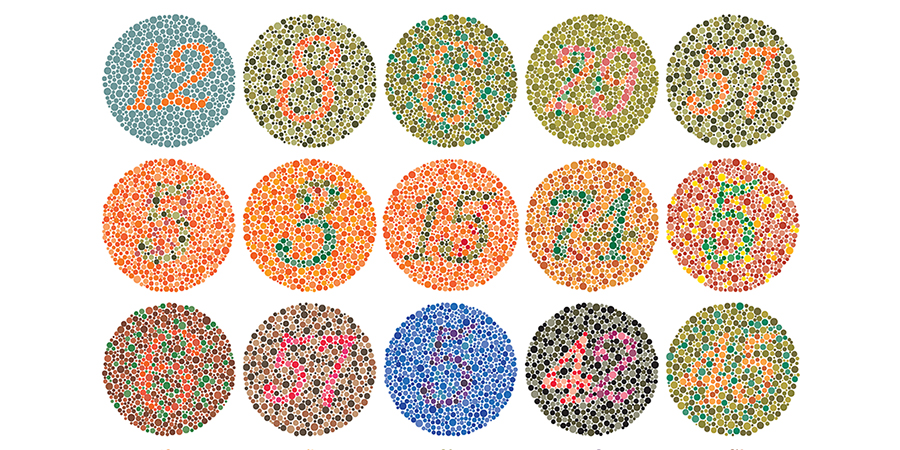
The most common test? The Ishihara color-plate test, where numbers or shapes appear hidden within colored dots.
Other assessments include:
- Hue-arrangement tests (e.g., Farnsworth-Munsell 100 Hue Test),
- Cambridge Color Test,
- Anomaloscope-based assessments.
Myths vs. Facts
Myth: “Color blindness = black and white vision.”
Fact: Most people with CVD see color, but may confuse certain shades. Total monochromatic vision is extremely rare.
Myth: “Color-correcting glasses cure color blindness.”
Fact: These glasses only help improve contrast—they don’t create new visual capacity.
Hope on the Horizon
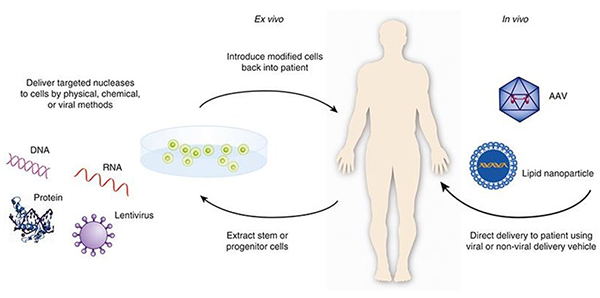
The future is promising: Gene therapy is under experimental study. Scientists are working on delivering healthy opsin genes to the retina to enable accurate color perception. Promising early results have emerged from animal studies and initial human trials, particularly for Achromatopsia.
In Conclusion;
Color blindness may alter how someone sees the world, but it doesn’t diminish their experiences. With adaptation, tools, and growing technological innovation, individuals with CVD thrive navigating life’s palette with creativity and resilience. Encouraging understanding helps us all appreciate the “unseen” nuances of how others perceive our colorful world.